

Hello Camino friends! Here’s what’s in this issue:
🗣“A Simple Way to Deepen Your Camino Experience Before You Even Leave Home”
📸Scenes from the Camino
🎥Live on Wednesday at 11: Joe Jacquinet tells us about his first Camino. Click here to join.
🥾How to get help planning your Camino.
Are you getting my posts directly to your email or Substack feed? If not, click here to join us.
“What’s the Camino?”
❓Not even sure what the Camino de Santiago is? Start here.
🤔Heard of the Camino but not sure if it’s for you? Read this.
Let’s get started!
🗣A Simple Way to Deepen Your Camino Experience Before You Even Leave Home
I’ve long had a love affair with languages. Ever since I opened my first French textbook in 8th grade and saw the picture of Mont St. Michel, the French language and culture have captured my heart.
My dreams of becoming bi-lingual were dashed by the French teacher I had my first year of college. She told me that, thanks to the six weeks I’d spent living with a French-speaking Swiss family one summer in high school, my speaking skills were higher than my classmates. As such, she said they needed more practice than I did and she would not be calling on me in class.
I was devastated.
But didn’t say so.
I never took another French class.
But thanks to those six week in Switzerland, French has stuck with me. I was never fluent. But within my first week of living in Switzerland, I was dreaming in French and writing in my journal in French.
Before a trip to Italy with my bi-lingual grandmother in 2008, I listened to Pimsleur Italian tapes—30 minutes a day for maybe 21 days. The goal was not necessarily to learn Italian but instead to learn enough so that when my hard-of-hearing grandmother spoke Italian and people responded to her, I could repeat what they said right into her ear.
It worked.
Maybe too well—people assumed I was fluent. Which was definitely not the case. But I was surprised by how much the Pimsleur CDs could give me in such a short time.
In 2012, before a 3-week trip to Italy, I again borrowed the Pimsleur CDs from the library. I got through more of them this time and was delighted with my abilities to at least ask for what I needed and even have some actual conversations!
A week later, I was on the Camino de Santiago for the first time. I hadn’t done anything to learn Spanish because 1) I had been studying Italian and figured I would get the two confused and 2) I figured the mix of pilgrims was international enough that I’d be able to get by with my English and my French.
I was right.
At the time (May, 2012), most Americans had only just started hearing about the Camino de Santiago thanks to the movie The Way —which debuted in the U.S. in the fall of 2011. I had initial fears that the Camino would be inundated with Americans thanks to that movie, but then I thought, “How many Americans are going to say, ‘Oh! A 500-mile walk across Spain? How fun!’ ”
That was back when I thought the Camino de Santiago was a single route starting in St-Jean-Pied-de-Port, France and ending in Santiago.
On the very first day on my first Camino, I found out how wrong I was. A woman came up behind me clacking her hiking poles on the pavement. She slowed to greet me in French. When I responded back in French, we started a conversation.
“Where did you start your Camino?” she asked me.
“In St-Jean-Pied-de-Port,” I said, confused, as I thought that was the only place from which one would start.
“Is this your first Camino?” she asked.
“Yes,” I said, confused even more as I huffed up that first hill into the Pyrenees. Who would do this more than once?
She told me it was her seventh Camino.
I thought I misunderstood her French.
“Septième?” I repeated.
Yep. Seventh.
Turns out I had a lot to learn about the Camino.
And I learned a lot—much of it thanks to the French people I met along the way who were patient enough to speak to me in their native language.
When I first arrived in St-Jean-Pied-de-Port, I stood on line at the pilgrim office to get my Camino passport. As I got to the front of the line, one of the women volunteering asked the people ahead of me if they spoke French. They didn’t—only English. So she indicated they should wait for the next available English-speaking volunteer and looked at me.
“Parlez-vous français?” she asked.
“Un peu,” I said. A little.
And so it was that she explained everything about the Camino passport, the Camino accommodations, the route over the Pyrenees—all in French.
I was elated that I understood almost all of it.
When I arrived at my first Camino accommodation (still in France), I spoke to the owner in French. Eventually she asked to see my passport and was shocked to see I was American. “But how do you know French?” she asked. Apparently French-speaking Americans were rare in her world.
But my best experience of using French on the Camino came on my third Camino in 2015. By this time, there were many more Americans (and English-speaking pilgrims in general) on the Camino and my opportunities to converse in French were fewer. So when I learned one of the pilgrims staying with us one night was from France, I took the opportunity to strike up a conversation.
I wasn’t sure he was interested in conversing—he was by himself whereas others were chatting in small groups. But when, in French, I asked him where he was from, a look of surprise crossed his face. As our conversation continued, his spirit seemed to brighten a bit. We chatted for over an hour. His story is not mine to tell, but he did share that he had been struggling on the Camino as he only knew French and had yet to meet anyone he could converse with, thus his surprise when I first engaged him in conversation.
At dinner that night, he sat beside me. A dozen of us went around the table introducing ourselves and it was then that I realized everyone spoke English—as their mother tongue or as a second, third, or fourth language — except the Frenchman.
So as people introduced themselves, I quietly whispered a translation to him. When I got a look for speaking while others were speaking, I explained what I was doing.
“You can speak French!” one of the pilgrims nearly jumped out of her chair.
“Well, a bit. I mean, I’m not fluent or anything, but I can get by.”
“Can you tell us a little more about him? We’ve been seeing him since we started our Camino, but since we don’t speak French, we haven’t been able to do more than say hello to him or wish him a Buen Camino.”
The others around the table nodded and murmured that they, too, would love to have a conversation with him with my help.
I translated their request to the Frenchman and his eyes lit up and then his face spread into a smile. I did my best to ask their questions and share his answers. And then he started asking about them. It was Camino magic in its purest form.
To this day, when people talk about what a difference it can make if you can speak even a little of another language, I always think of that Frenchman and our dinner companions that night.
Everyone has their stories of Camino magic. Many of mine involve being able to speak even just a little of a foreign language.
When I started learning Spanish, I came across the following quote. It still gives me chills.
If you talk to a man in a language he understands, that goes to his head. If you talk to him in his own language, that goes to his heart. -Nelson Mandela
As a native English speaker, do you need to learn another language in order to do the Camino? No. But will it make your experience that much richer? Absolutely.
With love,
Rebecca
P.S. It turns out that writing about the intersection of language and the Camino needs to be told in a few parts. More next week! If you missed Part 1, click here.
Is there a time when speaking another language led to a memorable experience for you—or for someone around you? I’d love to hear about it!
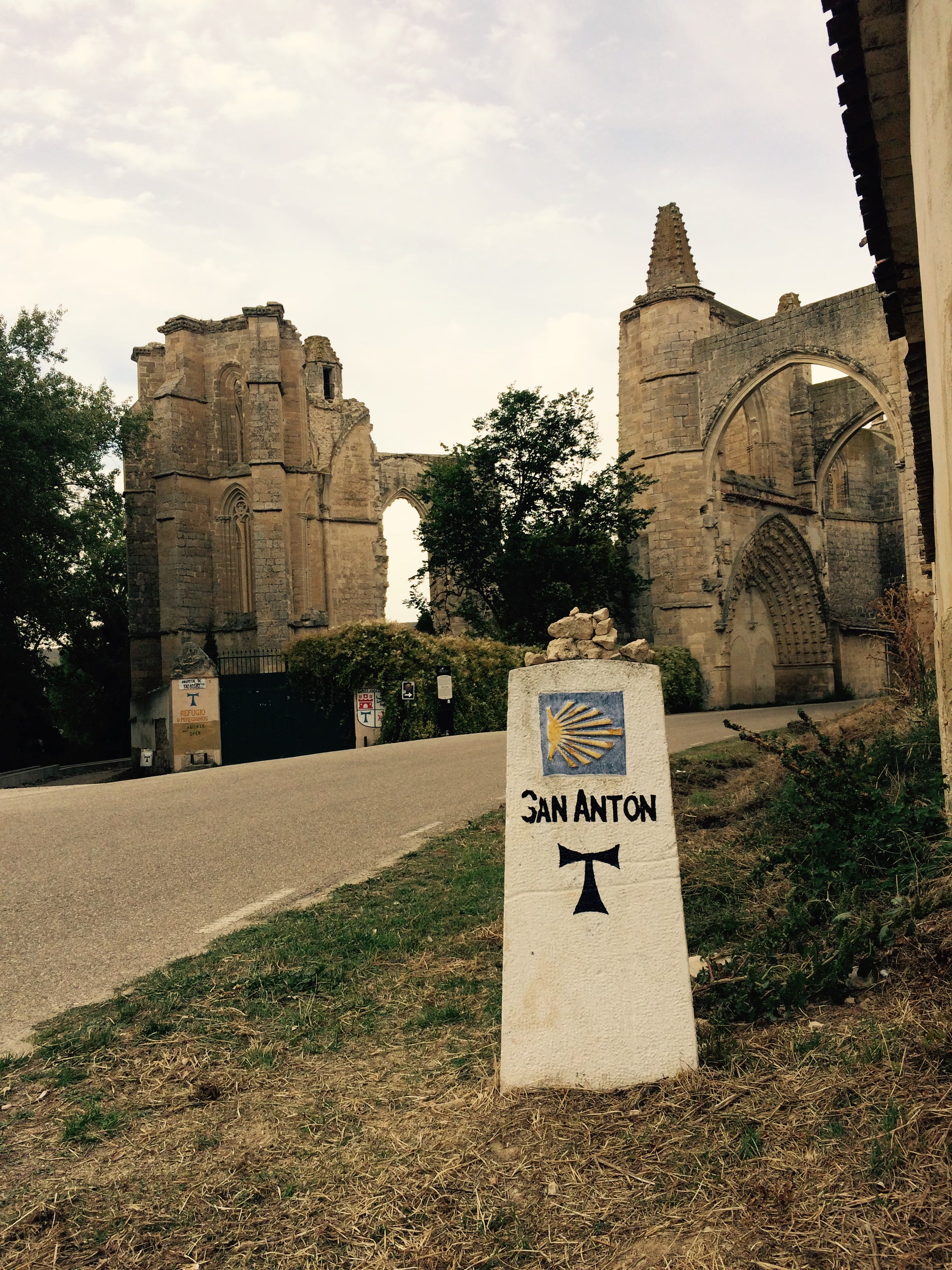
📸Scenes from the Camino
🎥Join me for live interviews with pilgrims who’ve walked one (or more!) Camino routes.
Wednesday, December 10, 11-11:45 ET: Joe Jacquinet. I met Joe in October on the Camino Inglés— a lesser-known Camino route that is just over 60 miles. I’m looking forward to learning how Joe came to choose this route and “comparing notes” with him about our respective journeys. Click here at 11am ET on Wednesday to join us!
Wednesday, December 17, 11-11:45 ET: Kathie Carnahan is one of the four wonderful women who joined me on my first Camino Walk with Rebecca last month. Join us to hear about her experiences on the Camino Inglés and get inspired by her journey from dreaming it to doing it!
Have your own questions for my guests? Join us live or leave a comment here and I’ll be sure to ask!
Have you walked the Camino de Santiago? I’d love to interview you! Send me a message at Rebecca@TheCaminoCalls.com or click below.
🥾Ready to start planning your Camino?
Rebecca Weston
Camino Planning & Preparation Guide (for People 45+)
Rebecca@TheCaminoCalls.com
Your Camino adventure should feel exciting, not stressful — here are some ways I can help you get ready:
Watch Camino Conversations for practical tips and advice from my guests who have done the Camino (or more than one!).
🗓️ Camino Planning Session (60 min): Get answers to your top questions and a notes doc created during our call.
📞 Full Camino Experience: 6 coaching calls with detailed notes to plan your trip with confidence and ease.
🥾 Walk With Rebecca: 7-day hybrid Camino walks — 3 days guided, 4 days independent, private rooms, preparation classes, and optional check-ins. Click here to be the first to be notified about my next trip.Rebecca Weston is an American who walked her first Camino in 2012.
About me: I’ve walked more than a dozen Caminos since my first in 2012. I’ve spent many days volunteering along the trail, and if I’m not walking one now, I’m planning the next—and would love nothing more than to help you plan yours, too. Originally from the US, my husband and I live in a town of 6500 people on the Camino del Norte.
Very impressed with your language skills --for me it has not come easily. I applaud your passion and utilization of it and how it has enriched your life and the life of others on the Camino. I'm still hoping to at least improve my very limited Spanish.