

She limped into the coffee shop and dropped her large backpack on the floor before slumping into a chair next to me.
I’d met her on the trail a few days earlier. “Are you okay?” I asked her, knowing the answer before she told me about her knee pain.
“You know,” I said, eyeing her backpack, “there are companies that will transport your pack for you—maybe you need a day of walking without so much weight on your back.”
“No,” she said, “it’s not my pack.”
I paused, unable to understand how carrying 10 pounds or more on one’s back could possibly not have any effect on one’s knees.
But I didn’t argue.
I’d chatted with her enough times to realize she was one of the people who, for reasons that were unclear to me, felt suffering was a requirement on the Camino. She always had a problem to complain about, but never wanted to implement the solutions others around her offered.
This is hard for me to see in life in general, but especially on the Camino. Some pilgrims have been dreaming about this trip for 10 years or more. Why risk not getting to Santiago de Compostela?
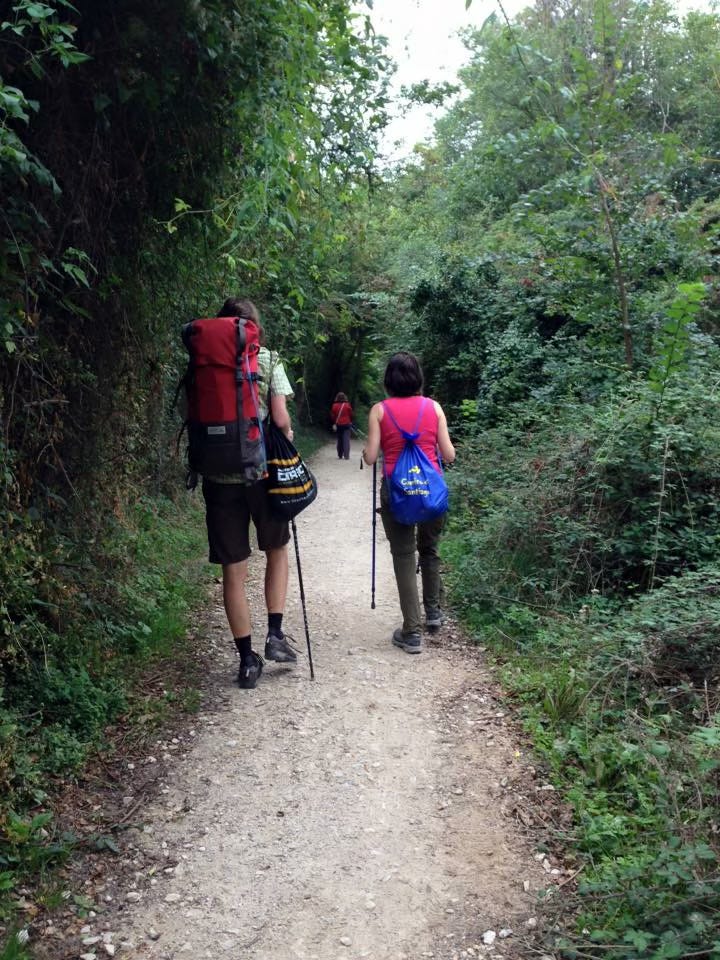
When I meet injured people on the Camino, I only offer advice if asked. I tell them to:
Visit a pharmacy. They have everything pilgrims need—they know their audience. And in Spain, they can diagnose and give you potions from behind-the-counter. If their assessment indicates you need to see a doctor, they’ll tell you where to go.
Send your pack—if you’re carrying one. There are dozens of companies offering this service for about 5 Euros per day. (See how to do it below!) They’re reliable and can be fully booked before your trip or as late as 8pm the night before you want to use them.
Take a rest day. Or, if you feel like you want to keep moving forward, do a shorter day. If you already have a place booked for the night and can’t imagine arriving there on foot that day, go to the nearest bar (they’re not hard to find in Spain) and ask them to call you a taxi. (Side note: “Taxi” is one of the most universal words around the world!)
If an injured pilgrim rejects all of my ideas, I throw one final thought out there. “Is your goal to get to Santiago de Compostela?” I ask. “If so, you need to take care of yourself.”
But here’s the thing: luggage transfer on the Camino are not just for the injured.
If you are not interested in carrying all your belongings on your back on the Camino de Santiago, you don’t have to!
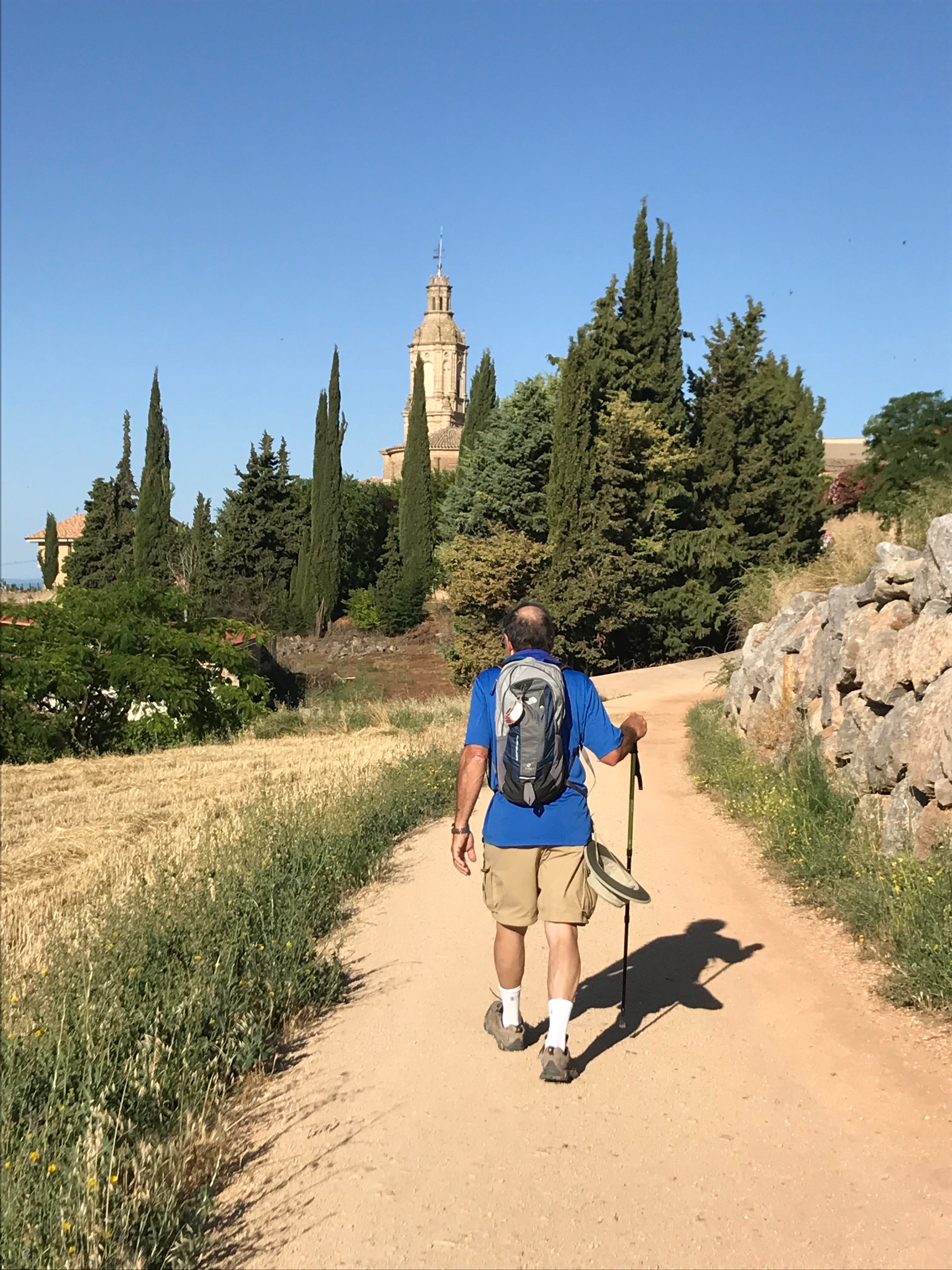
The Camino will challenge you in ways you never imagined. There’s no need to bring more suffering upon yourself—unless you want to.
So below is your guide to using the luggage transport services on the Camino.
With love,
Rebecca
How Luggage Transfers Work on the Camino de Santiago
Once your accommodations are booked, you can set up luggage transfers from the comfort of your home computer. Here’s how.
(Note: As part of my Full Camino Experience planning package, I’ll help you book your luggage transfers during one of our planning sessions, after we’ve finalized your accommodations.)
Before leaving home:
Get your accommodations finalized. (You need to know where your bags are going before booking a luggage transfer company!)
Go the the website of the company you want to use. (Just google, “Luggage Transfer on the Camino ______” — filling in the route you’ll be taking. I and my client have used Correos, Taxi Camino Inglés, Jacotrans, Pilbeo, Top Santiago, Camino Facil, and TuiTrans.)
Follow the directions to input your dates and destinations. Triple check that you have the correct dates and locations!
Pay for the service.
You should receive an email confirmation as well as the luggage tags to print and attach to your bag. I recommend printing them and taking them to an office supply store to get them laminated. Don’t affix them to your bag until you get to your Camino starting point—you don’t want to lose them before you even start!
Take a picture of the luggage tag and/or make note of which company you are using and their phone number.
When you get to your Camino starting point:
Affix the luggage tag to your bag.
Contact the luggage transfer company to confirm that they will be picking up your bag the next day. (This is not always required, but highly recommended for piece of mind.) Most of the companies are on the messaging app WhatsApp (free).
Confirm with your accommodation where you need to leave your bag in the morning. (The front desk, at the bottom of the stairs, etc.)
Get your bag to the location by 8am. Do not be late! I have seen luggage transfer services arrive exactly at 8am to start their rounds.
When you arrive at your next accommodation for the night:
Ask if your bags have arrived. Depending on the company you use, bags may not arrive until as late as 4:30.
If your bag has not arrived by the designated time—relax. Contact the company or ask someone to contact them on your behalf. Having used this service hundreds of times, this has only happened to me twice and both times my bag was delivered to me within the hour.
Confirm with your accommodation where you need to leave your bag in the morning. (The front desk, at the bottom of the stairs, etc.)
Get your bag to the location by 8am.
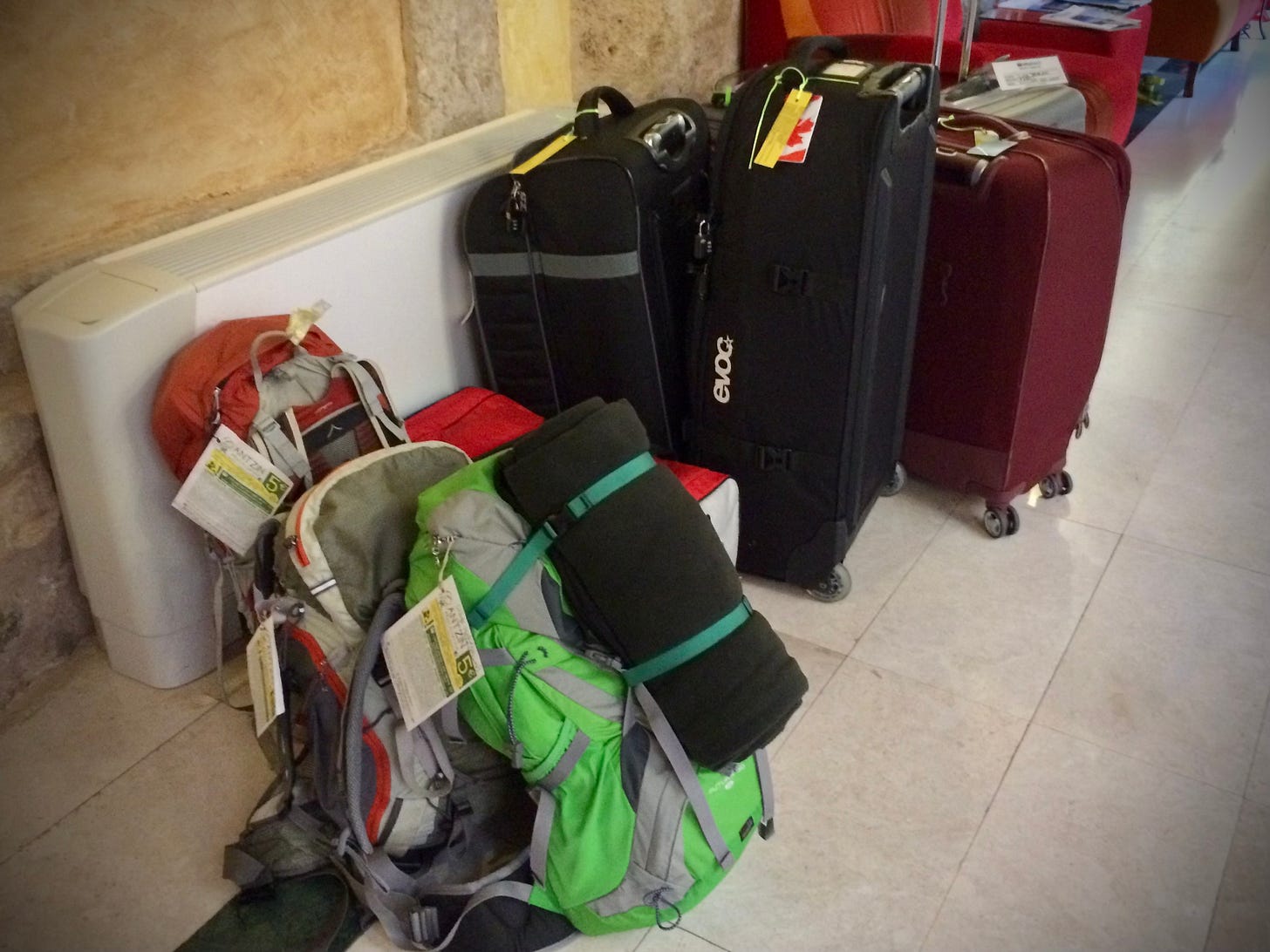
Yours will not be the only bag being transported!
Is this safe?
Yes. My clients and I have used these services thousands of times.
Don’t pack your great-grandmother’s pearls. You won’t need them on the Camino.
If you’re bringing electronics, be prepared to carry them with you in all kinds of weather. (E.g. If I’m working while on Camino, my laptop is in my daypack in its case and that case is in a couple layers of plastic bags in case it rains.)
Some people buy AirTags or similar and put it in their bag to know its location at all times.
You could also lock your luggage. I never have and have never had anything go missing.
🎥Join me live on Substack!
Wednesday, May 13, 11am ET: “Camino Conversations: What to Pack for Your Camino.” I will specifically address those that will be sending their packs with luggage transport services and staying in private rooms. (E.g. I won’t be talking about sleeping bags and camp towels!)
To join us live, click the link above at the designated date/time.
Listen to previous episodes of Camino Conversations on Spotify or watch them here.
If you’re planning a Camino, you should read this. (And if you’d like my help planning your Camino, click here.)
021: What to Really Expect from Accommodations on the Camino de Santiago

Hello Camino friends! Here’s what’s in this issue:
If you have other Camino safety concerns, this posts may be of interest:

Have you ever regretted packing too much while traveling?
🥾Ready to start planning your Camino?

Rebecca Weston
Camino Planning & Preparation Guide (for People 45+)
Rebecca@TheCaminoCalls.com
Your Camino adventure should feel exciting, not stressful — here are some ways I can help you get ready:
Watch Camino Conversations for practical tips and advice from my guests who have done the Camino (or more than one!).
🗓️ Camino Planning Session (60 min): Get answers to your top questions and a notes doc created during our call.
📞 Full Camino Experience: 6 coaching calls with detailed notes to plan your trip with confidence and ease.
🥾 Walk With Rebecca: 7-day hybrid Camino walks — 3 days guided, 4 days independent, private rooms, preparation classes, and optional check-ins. Click here to be the first to be notified about my next trip.Rebecca Weston is an American who walked her first Camino in 2012.
About me: I’ve walked more than a dozen Caminos since my first in 2012. I’ve spent many days volunteering along the trail, and if I’m not walking one now, I’m planning the next—and would love nothing more than to help you plan yours, too. Originally from the US, my husband and I live in a town of 6500 people on the Camino del Norte.
Thanks for de-mystifying (and de-stigmatizing) the luggage-transfer process, Rebecca! I didn't transfer my luggage on my first Camino. It worked out OK. but when I hiked Hadrian's Wall in the UK last year, I did and it was lovely. Made the trip really enjoyable. I walked faster and freer. (I will say I was always a bit nervous about my luggage turning up at the next place at the end of the day ... and it always did!).
Top Santiago luggage transfer service was a godsend this time. Learned from my first Camino outing. Thank you for sharing this.