

I had worried that a last-minute trip to Lourdes, France, the day before Easter was maybe not my best decision. But everywhere I went, I kept thinking, “Wow. This is not nearly as busy as I thought it would be.”
My first surprise was that I could even find a place to stay for the night. But a friend later told me that, in France, Lourdes is second only to Paris in the number of available rooms. This made sense as when I left the train station to walk to my accommodation, my first impression was, “I’ve never seen so many hotels in one place!”
For those of you that don’t know, Lourdes is one of the most visited Catholic pilgrimage destinations in the world. It ranks up there with the Vatican (Italy), Fatima (Portugal) and Guadalupe (Mexico). Guadalupe far exceeds any of the others—over 20 million visitors per year. This is double the number that go to the Vatican and four times the number that go to Lourdes.
Santiago de Compostela receives up to 3 million visitors per year but, in contrast to all the aforementioned sites, over 500,000 of those visitors arrive by foot, bike, wheelchair or horse—after traversing at minimum 60 miles and as many as 500 miles or more.
The high season for both places is May to October.
People come from all over the world to both, but Lourdes was the first place I’ve been where I heard so many languages I couldn’t even identify.
In Lourdes, I saw hardly anyone dressed in hiking clothes—unlike in Santiago de Compostela where pilgrims who walked in are clearly identifiable by not just their clothing but also their hobbles (due to whatever injury they sustained).
The Hidden Basilica You Might Miss
The proprietor of my accommodation gave me a very specific route to take once inside the main gate at Lourdes. “You’ll see a bookstore and an information center. Go between those and keep walking. I’m not going to tell you what’s there. But you can’t miss it—you’ll walk right into it.”
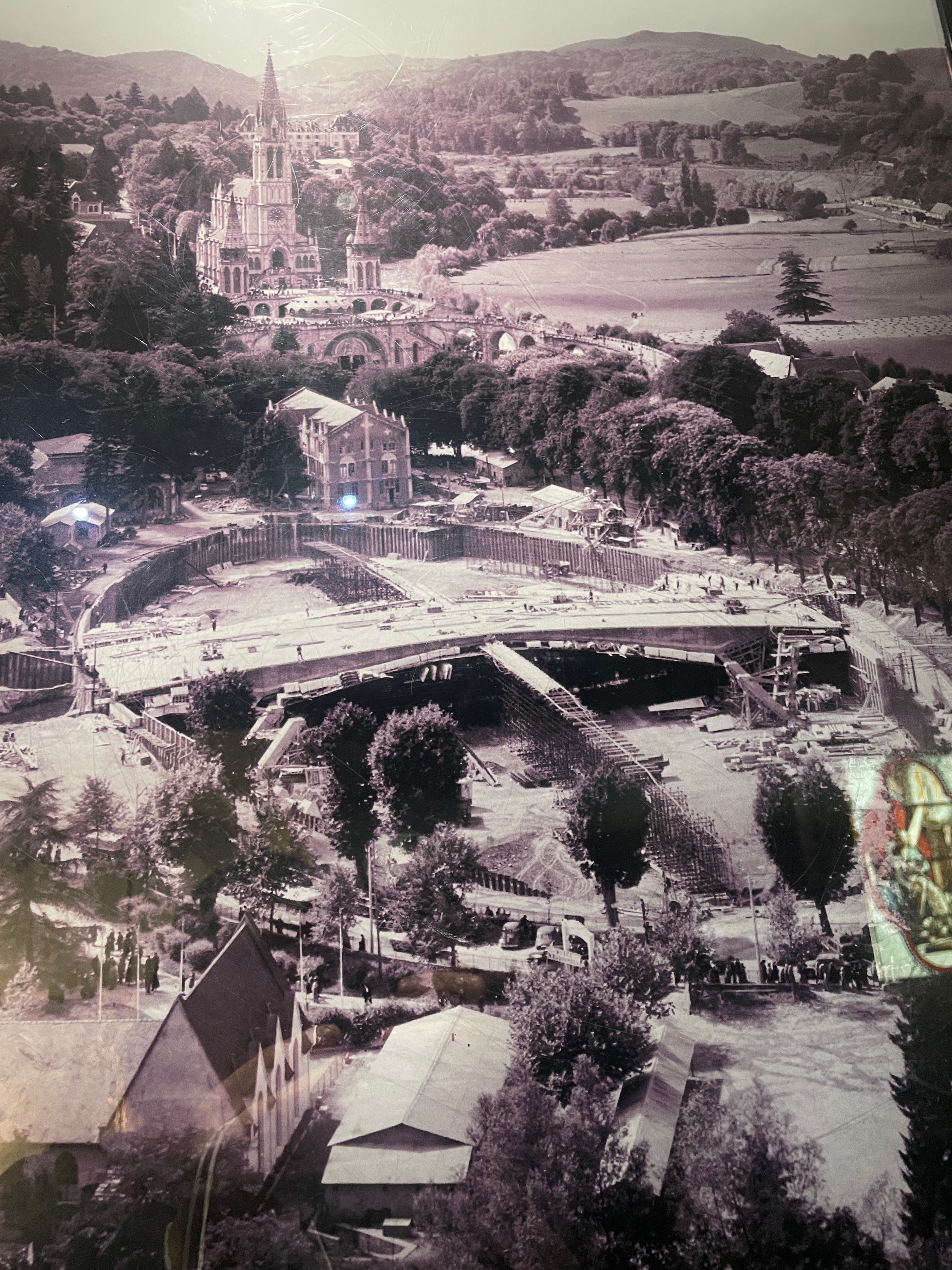
Indeed, many pilgrims to Lourdes miss that which he directed me to: the underground Basilica of St. Pius X. I walked into it and thought it was one of the ugliest structures I’d ever seen—it’s pretty much all concrete. No windows, let alone stained glass.
But it’s downright stunning in its size.
I estimated it had to be at least a football field long. Turns out it’s twice that. And holds. . . 25,000 people! In terms of seating capacity inside a church, the Basilica St. Pius X is second only to the Basilica of Our Lady of Aparecida in Brazil (which holds 30,000 people).
And, thanks to the modern engineering available in the 1950s, you can see from one end to the other completely unimpeded by any columns.
I walked around it and kept stopping to take it all in. Did they really fill this thing? Because I was there at 2 in the afternoon the day before Easter and there were maybe 10 of us in the entire structure.
And why underground? It turns out they didn’t want to overwhelm the site with such a large structure.
The Grotto: Still at the Heart of It All
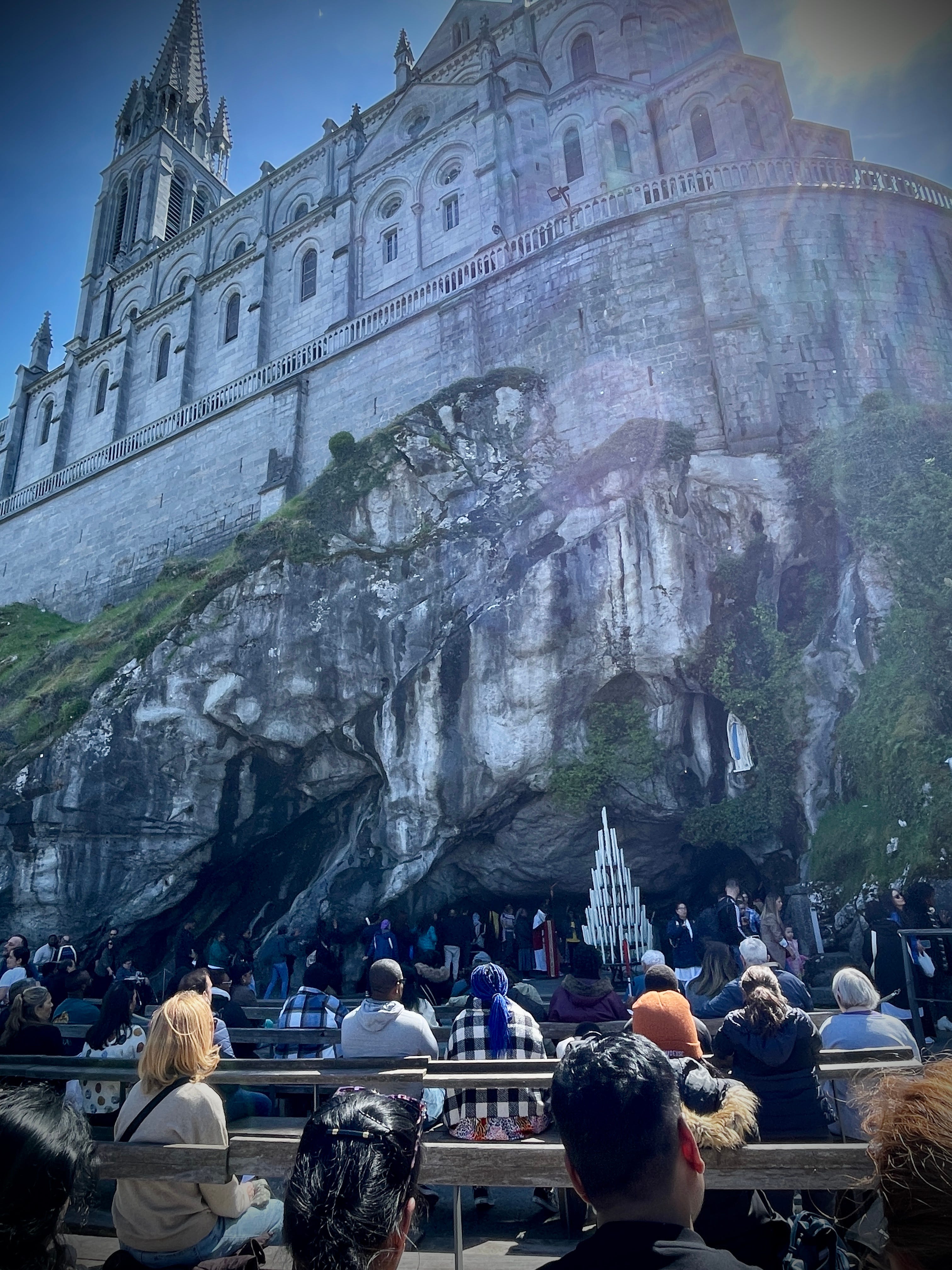
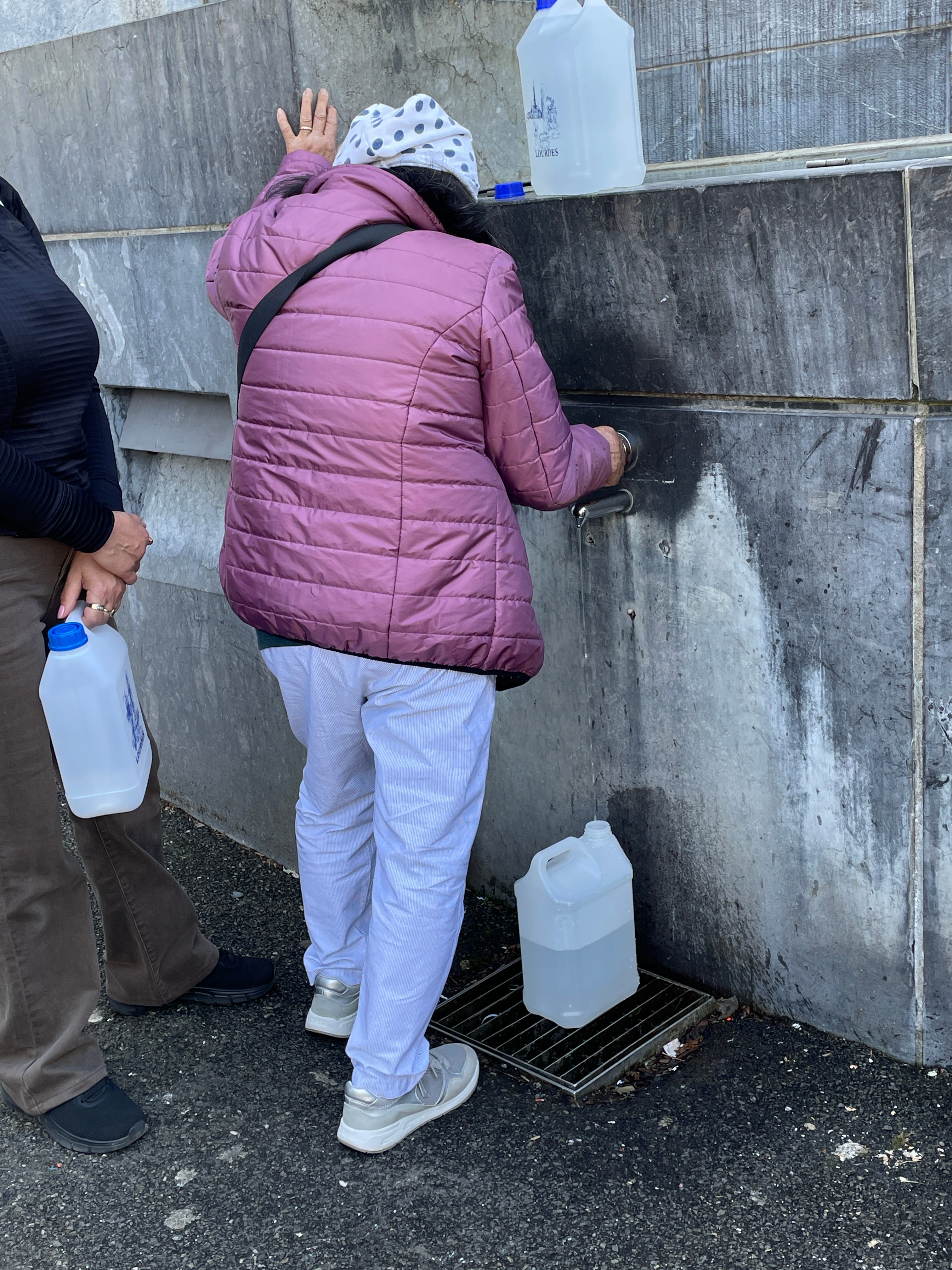
Indeed I was quite impressed that the grotto (before which Bernadette had her visions of the Virgin Mary) was not inside a structure at all. Don’t go into any of the site’s three Bascilicas looking for it. It’s still outside with a cluster of benches in front of it if you want to sit and listen to the mass; there was always one going on while I was there, sometimes in a language I’d never heard in my life.
Thankfully, the owner of my accommodation told me where the grotto was otherwise I would have assumed a church had been built over it/around it.
Easter Vigil: Filling the Space
And in answer to my earlier question as to if they fill the underground Basilica: Definitely.
I found myself inside it at the start of the Easter Vigil mass. By the time the mass started, every seat was taken and there were at least a thousand people standing. Oddly, it didn’t feel crowded. There was still “space” thanks to the height overhead and a wide walkway around the entire structure that allowed for people to stand while still leaving room for others to exit the structure.
On Miracles
For those of you hoping for some miraculous conversion while I was there, I can’t give you anything.
But while there I met two people who had converted to Catholicism after an experience they had at Lourdes.
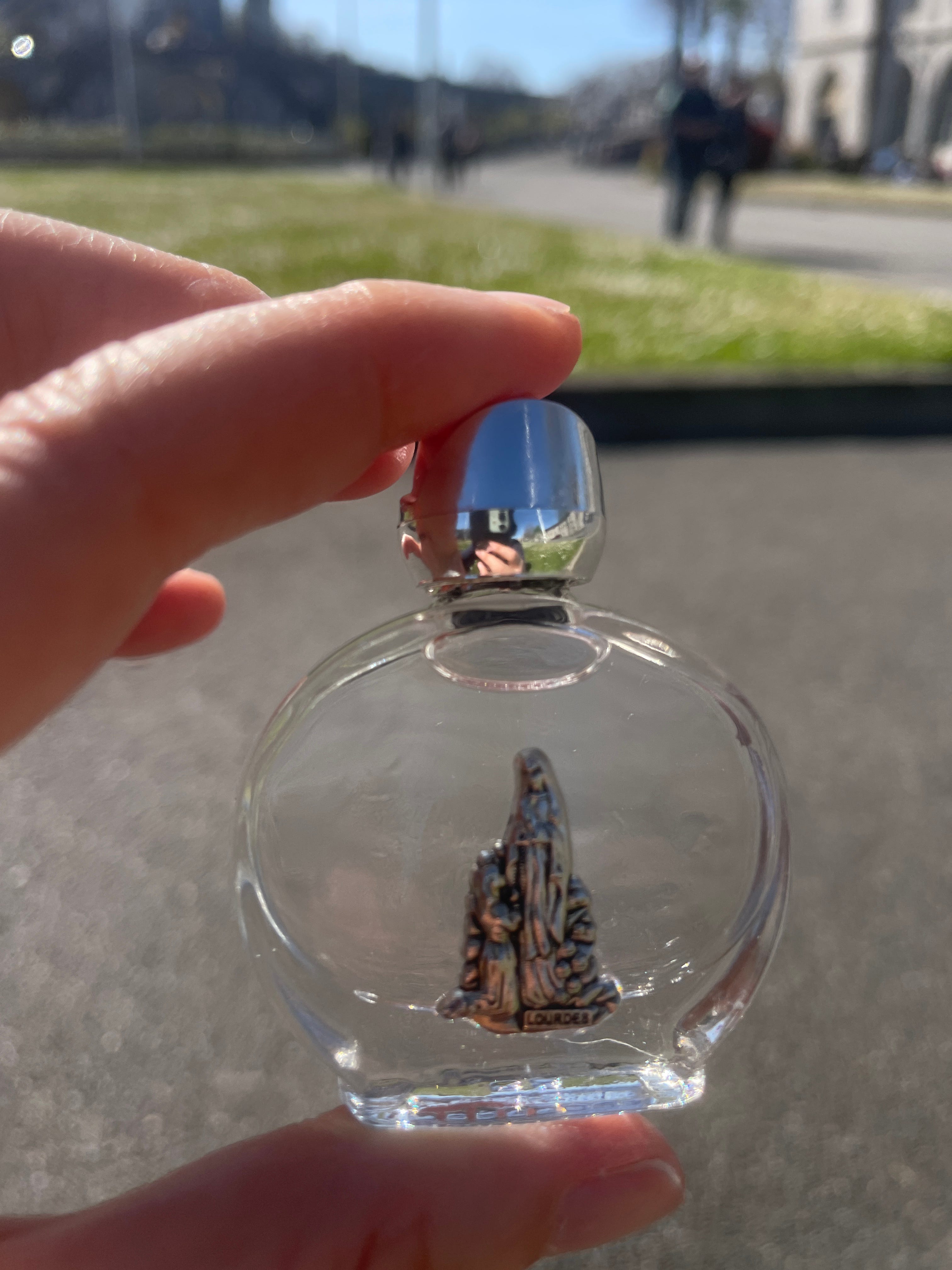
In fact, there are over 7000 people who have claimed to have had a miraculous healing thanks to their visit or to something associated with the site. But only 73 have been official recognized by the Catholic Church. The site employs a full-time physician in the Lourdes Medical Bureau who is there to take people’s claims of healing and research them.
I learned about this while at the Museum of Miracles, where you can read about each of these 73 people and see a short film where the on-site doctor is interviewed. In one scene, he pulls out a file folder that’s stacked a foot tall with papers. He pulls off the top few pages and says, “This is the official church recognition.” The rest of it? All the medical research into the claim.
There are a variety of criteria that must be met in order for a miracle to be recognized. One is that the healing has to last. In other words, you can’t drink the water from the spring at Lourdes, have something healed, and then head over to the doctor to get it approved.
The illness or injury must have been well-documented prior to the healing.
It has to be considered incurable or very hard to treat.
The healing must be unexpectedly fast.
The person must be completely healed (no lingering symptoms)
The healing must last.
Multiple medical professionals have to attest that there is no scientific explanation.
Leaving Lourdes (For Now. . . )
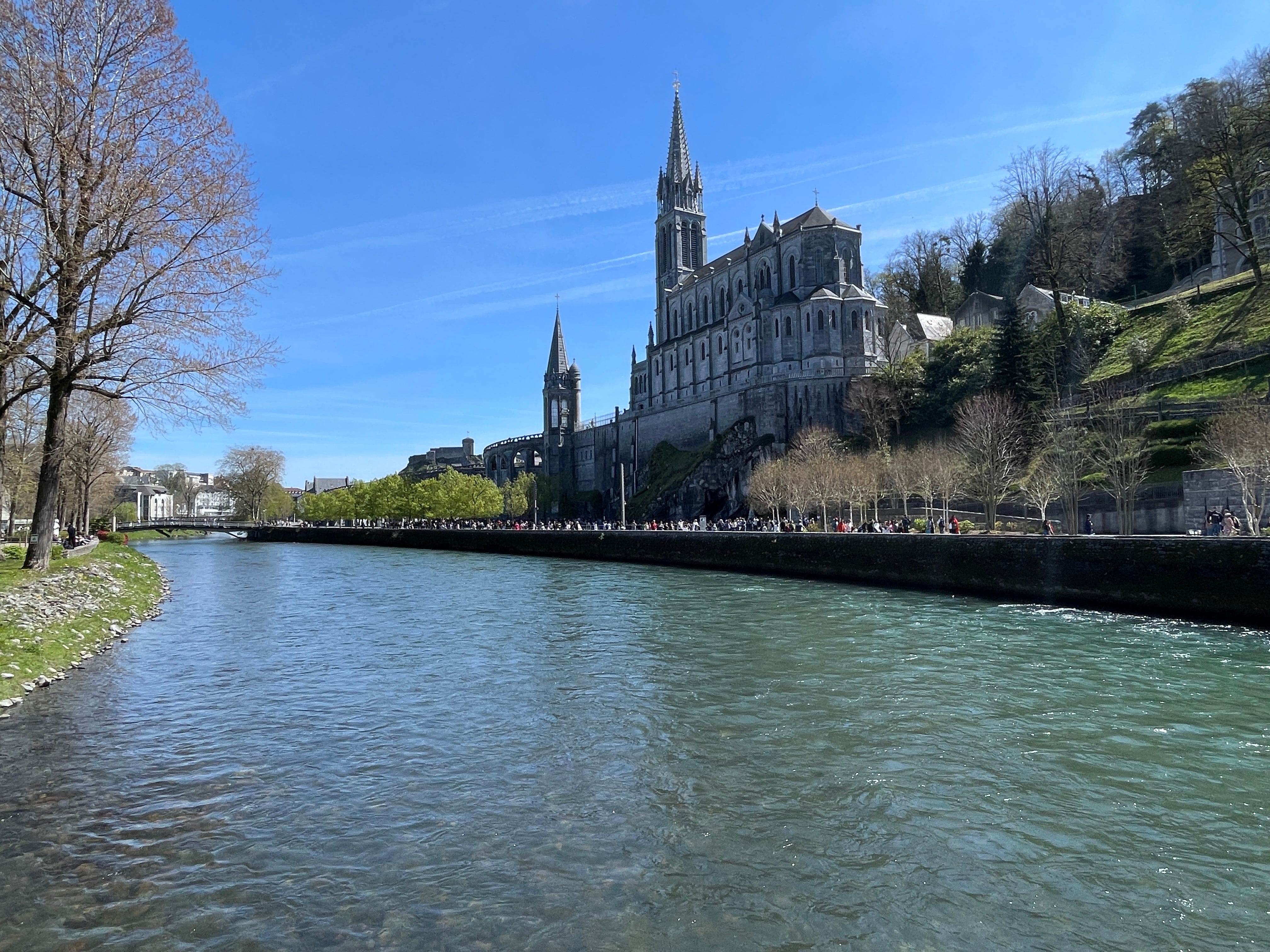
I was only in the city of Lourdes for 24 hours. But somehow I didn’t feel rushed. But that’s partly because I have a feeling I’ll be back there. Because did a mention there’s a Camino route from Lourdes? And there’s a Camino pilgrim office there as well? But that’s a story for another day.
With love,
Rebecca
P.S. There is so much more I saw and did, but it’s too much for one post! Did you know that authorities blocked access to the grotto at one point during the time of Bernadette’s visions as they feared the chaos that could result from the masses of people who were flocking to the site?
So she just patiently waited across the river, in sight of the grotto. And that’s where she had her last two visions—where she said she could see the Virgin Mary even more clearly from a distance. The Church of St. Bernadette now stands on that site.
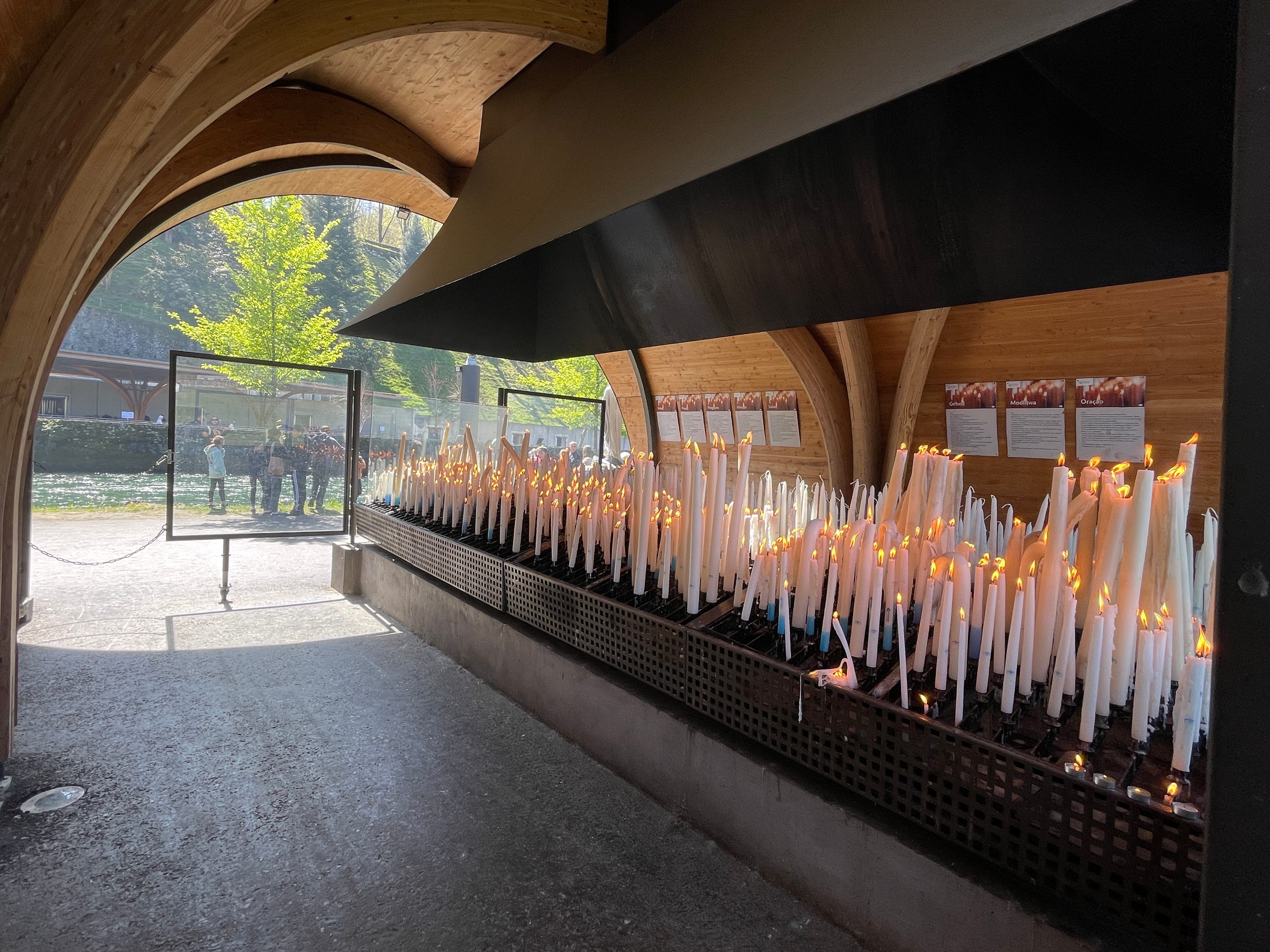
P.P.S. There were about a dozen people who wrote in response to my last post asking for prayers or candles lit on behalf of themselves or someone else. If you are the praying or sending-positive-thoughts type, please keep them in mind.
🎥Camino Conversations: Join me for live interviews here on Substack!
Camino Conversations is on pause as I complete my travels in France.
In the meantime, take a listen to this engaging conversation I had with Blaine Greenfield of Blainesworld.net. I was honored to be invited to talk about the Camino and Camino Calls, and especially to share the spotlight with Tim Wesolowski, a client I had the privilege of helping begin his Camino journey.
Listen to previous episodes of Camino Conversations on Spotify or watch them here.
Want to be a guest on Camino Conversations? Email me at Rebecca@TheCaminoCalls.com or leave a comment below.
🥾Ready to start planning your Camino?
Rebecca Weston
Camino Planning & Preparation Guide (for People 45+)
Rebecca@TheCaminoCalls.com
Your Camino adventure should feel exciting, not stressful — here are some ways I can help you get ready:
Watch Camino Conversations for practical tips and advice from my guests who have done the Camino (or more than one!).
🗓️ Camino Planning Session (60 min): Get answers to your top questions and a notes doc created during our call.
📞 Full Camino Experience: 6 coaching calls with detailed notes to plan your trip with confidence and ease.
🥾 Walk With Rebecca: 7-day hybrid Camino walks — 3 days guided, 4 days independent, private rooms, preparation classes, and optional check-ins. Click here to be the first to be notified about my next trip.Rebecca Weston is an American who walked her first Camino in 2012.
About me: I’ve walked more than a dozen Caminos since my first in 2012. I’ve spent many days volunteering along the trail, and if I’m not walking one now, I’m planning the next—and would love nothing more than to help you plan yours, too. Originally from the US, my husband and I live in a town of 6500 people on the Camino del Norte.
I loved your story about Lourdes. But 24-hours? Of course, you will be back.
There are a couple of good movies about Bernadette.
"The Song of Bernadette (1943): An Oscar-winning drama chronicling the life of Bernadette Soubirous, who experienced visions of the Virgin Mary in Lourdes, France" is the one I saw.