

The Camino Is What You Make It
When people ask me if the Camino de Santiago is “religious,” I answer with, “only if you want it to be.”
I explain that it was certainly born out of religion (see The Story Behind the Camino de Santiago).
But my 14 years of walking Camino routes through France, Spain, and Portugal, have shown me there are all kinds of people walking the Camino for all sorts of reasons (See Is The Camino for Everyone? Is It For Me?).
So if you’re avoiding the Camino because you think it’s “too religious,” get over that and go. Or if you’re hoping to walk the Camino for deeply religious reasons, go for it—but don’t expect everyone else to believe anything you do.
Because the Camino is about something bigger than religion. It’s humanity —often at it’s finest.
A Moving Community of Pilgrims
Are there challenges? Absolutely.
Will you meet grumpy people? Sure. A moving community of hundreds of thousands of people is bound to catch someone on a bad day.
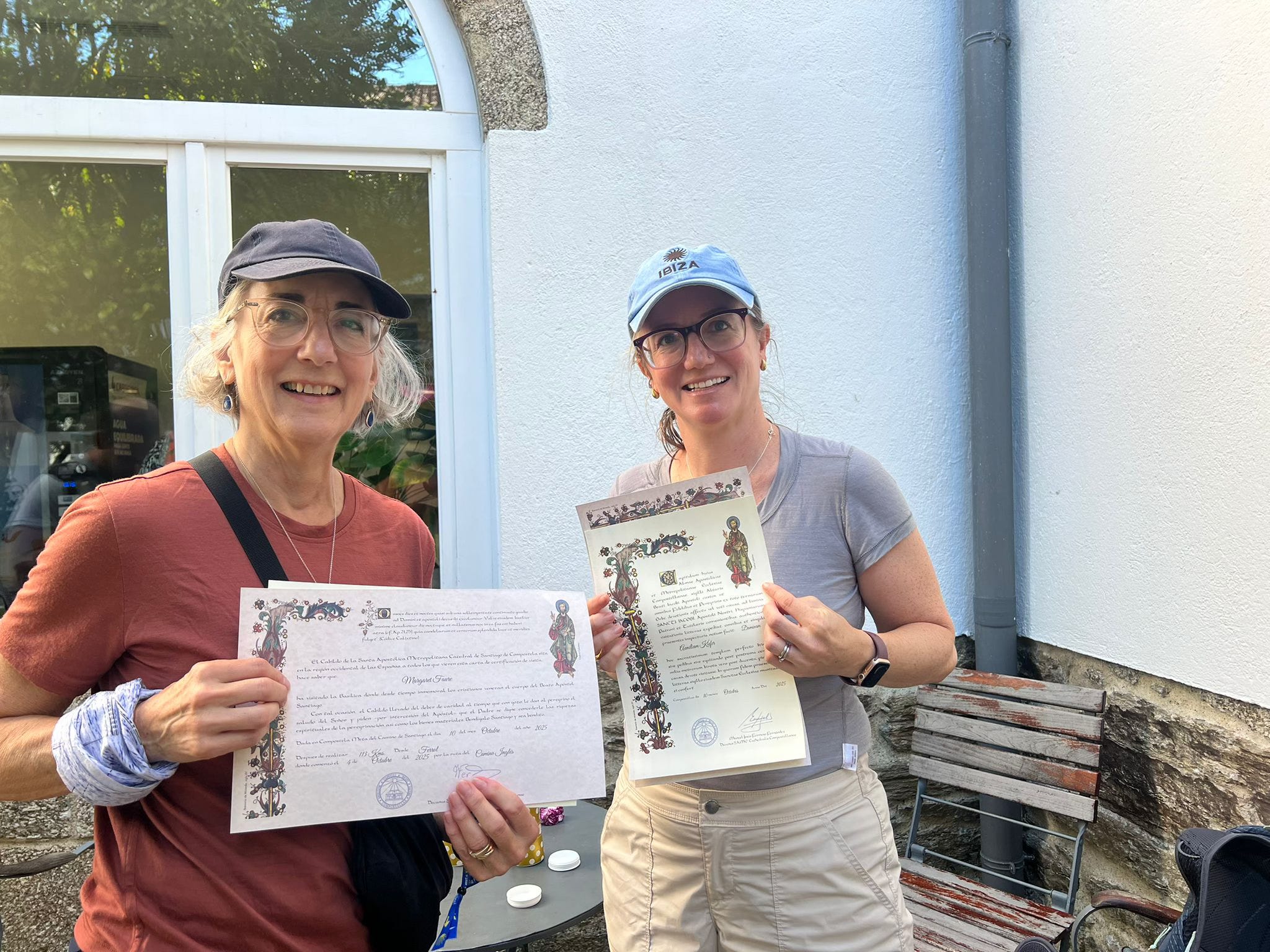
In 2025, over 490,000 people walked into Santiago de Compostela and received a certificate saying they’d done so (called the compostela). Another 21,000 arrived by bike, 723 on horseback, and 257 by wheelchair.
But those are only the people who had a goal to get to Santiago de Compostela and reached it. Many more people only walk a portion of one of the routes (either intentionally or unintentionally due to injuries)—and no one keeps statistics on them.
Medieval Crowds on the Camino
But this isn’t the first time Santiago de Compostela has received this number of pilgrims. Guesses for medieval pilgrim numbers to Santiago vary from 0.5 to 2 million a year (Rahtz and Watts 1986: 52).
And remember that in the Middle Ages, once you got to Santiago de Compostela, you had to turn around and walk back home! (I’ve met pilgrims doing this, but it’s much less common.)
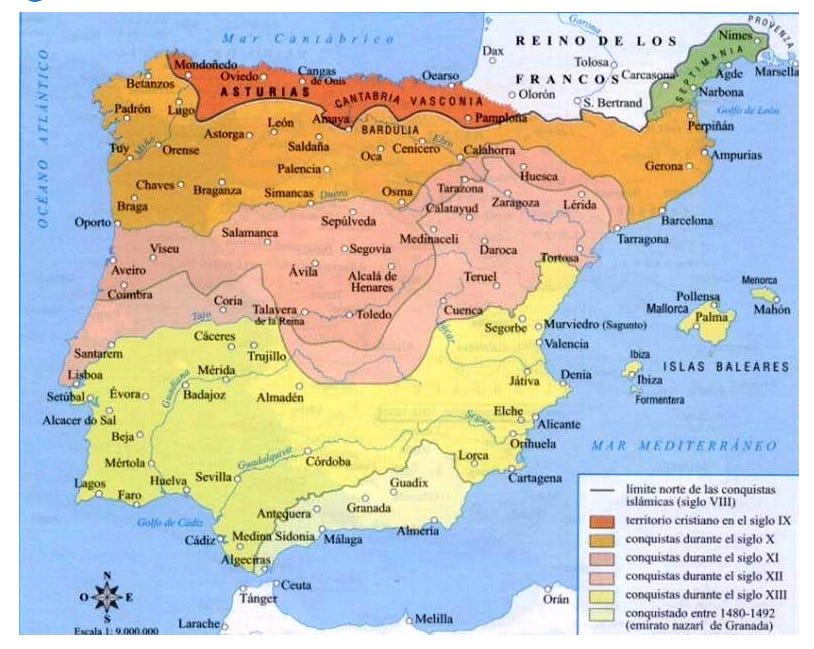
The height of medieval pilgrims to Santiago occurred between the 11th and 14th centuries. As part of the Reconquista, the Christians were still fighting back the Moors, but as the map below shows, that battles had moved south of the Camino Francés route (which goes through the cities of Pamplona, Leon, and Astorga).
A Cathedral—and a Pilgrimage Boom
The cathedral at Santiago de Compostela was consecrated in 1211. (Though the one you see today has had modifications and additions since then.)
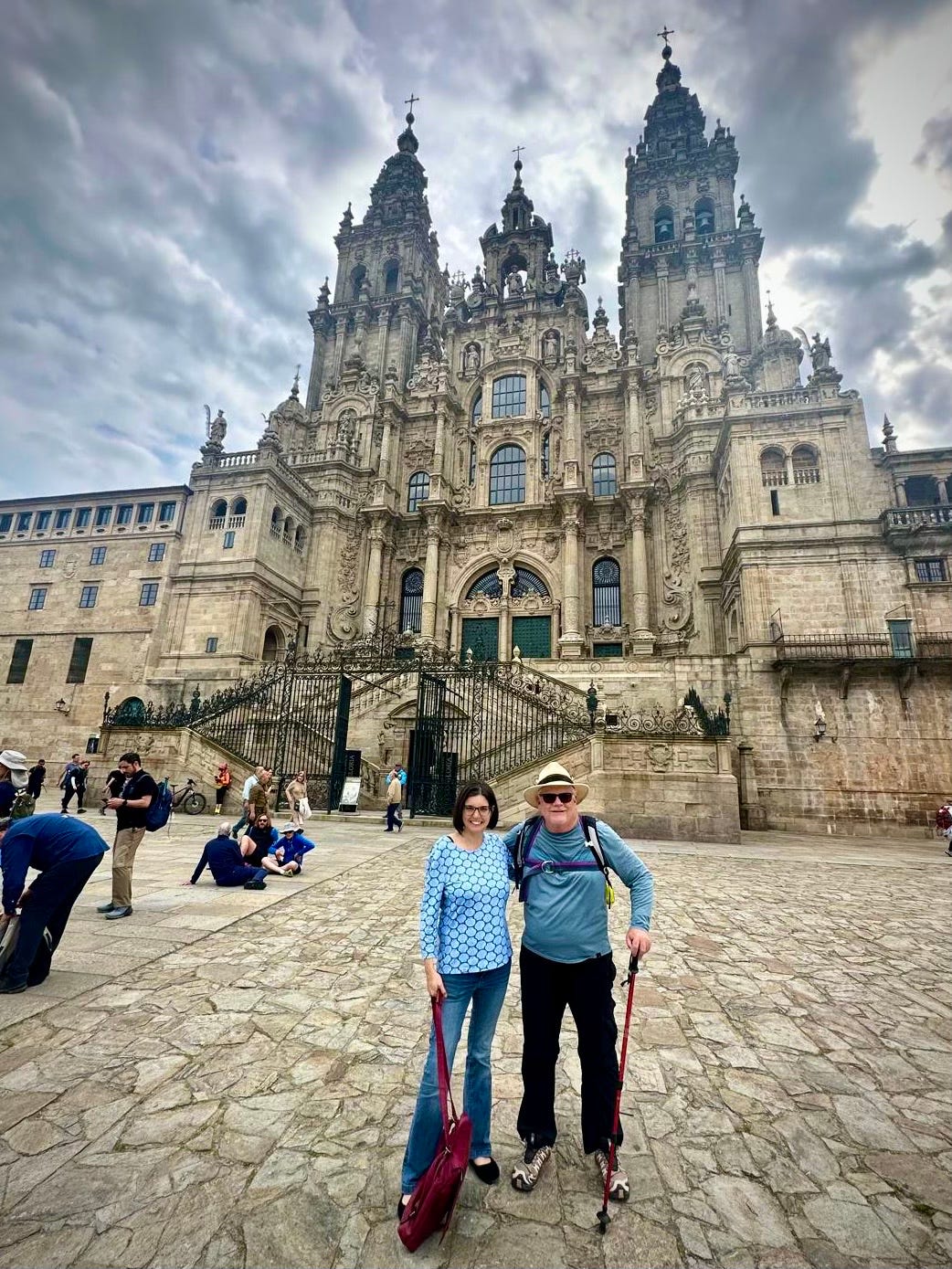
Pilgrims were certainly flocking across Spain.
So what happened?
History.
War, Plague, and Religious Change
From 1337-1453, the Hundred Years War between England and France prevented pilgrims from traversing across France or sailing from England to get to Santiago de Compostela.
From 1347-1351, the Black Death didn’t keep people motivated to leave their homes to walk across one or more countries.
On the brighter side, in 1492, the Moors surrendered at Granada so the 700+ year Reconquista of the Iberian Peninsula was finally over.
But the tide in favor of Christian pilgrimage didn’t last too long, as the Protestant revolution began in 1517. (Martin Luther was critical of pilgrimage and veneration of relics.)
When St. James Disappeared
Also in the 16th century, the Turks began their attacks on the Galician coast. The city of Santiago de Compostela is not far from this coast, so it was decided (in 1589) that the remains of St. James should be hidden.
But communication wasn’t clear and for nearly 300 years, no one had any idea where St. James’ remains were.
During the Enlightenment (1700s), the intellectuals were increasingly skeptical about miracles, relics, and other medieval traditions. During the 1800s, many religious institutions were closed—their wealth liquidated to reduce public debt or, for example, fund the Carlist wars in Spain. Some of these were the institutions that offered care, housing, and food to pilgrims along the Camino de Santiago.
Rediscovery—and a Quiet Camino
In 1879, the lost remains of St. James were “rediscovered.”
How do we know they were actually the remains?
Because in 1884, the Pope said so.
Even so, historians say that, by this time, only a few hundred people per year were walking to Santiago de Compostela.
Next: The Modern Revival
So how did we get to the point where over a half-million people arrived to Santiago de Compostela as pilgrims in 2025?
Next Sunday, I’ll cover the modern-day revival of the Camino de Santiago.
With love,
Rebecca
🎥Camino Conversations: Join me for live interviews here on Substack!
This week, I’ll be sharing Part 2 of my own experiences on the Camino. If you missed Part 1, you can get caught up here.
Coming up this week:
Wednesday, March 11 — A few weeks ago, I decided to finally share my own Camino story. It was filled with unknowns, surprises, laughter, and challenges—and that was before I ever put my foot on the trail. This week, I’ll answer the question, “What do you do when you wake up on the Camino to find you can no longer bear weight on one of your ankles?” Because yes—that happened to me. On Day 5.
Listen to previous episodes of Camino Conversations on Spotify or watch them here.
Want to be a guest on Camino Conversations? Email me at Rebecca@TheCaminoCalls.com or leave a comment below.
🥾Ready to start planning your Camino?
Rebecca Weston
Camino Planning & Preparation Guide (for People 45+)
Rebecca@TheCaminoCalls.com
Your Camino adventure should feel exciting, not stressful — here are some ways I can help you get ready:
Watch Camino Conversations for practical tips and advice from my guests who have done the Camino (or more than one!).
🗓️ Camino Planning Session (60 min): Get answers to your top questions and a notes doc created during our call.
📞 Full Camino Experience: 6 coaching calls with detailed notes to plan your trip with confidence and ease.
🥾 Walk With Rebecca: 7-day hybrid Camino walks — 3 days guided, 4 days independent, private rooms, preparation classes, and optional check-ins. Click here to be the first to be notified about my next trip.Rebecca Weston is an American who walked her first Camino in 2012.
About me: I’ve walked more than a dozen Caminos since my first in 2012. I’ve spent many days volunteering along the trail, and if I’m not walking one now, I’m planning the next—and would love nothing more than to help you plan yours, too. Originally from the US, my husband and I live in a town of 6500 people on the Camino del Norte.
The history is so interesting! To think that the Camino has gone from a handful of pilgrims to the over 400,000 today!
So interesting! Thanks for sharing this information!