

My First Camino Guidebook
The first time I walked the Camino de Santiago, I had a guidebook in the outside pocket of my backpack where I could easily pull it out when needed—to know if there was a place to eat in the next town, for example, and how far I had to walk before I got there. Or to figure out if I was still on the trail or had somehow wandered off.
As time went on, apps were developed and trails were more thoroughly marked. I still carried a guidebook in the early days of these advances as I really like seeing a map spread out in front of me.
But what did pilgrims use to guide them back in the Middle Ages?
Pilgrims Before GPS
Most were headed west to Santiago de Compostela, so with the sun at their backs, they would set off. If they chose to walk at night, it is said they followed the Milky Way. They could also ask for directions in towns they walked through.
And by the mid-12th century, they could follow what is widely believed to be the first travel guide ever written: the Codex Calixtinus. But as we’ll see, it wasn’t exactly the handbook for walkers that you might expect.
Enter the Codex Calixtinus
Like so much of the Camino de Santiago history, there’s a bit of mystery around the guide. It is said it was complied by a French cleric, Aymeric Picaud. But other historians argue he may have been just one of many to compile the information found in the 5 books that make up the Codex Calixtinus.
Book 5 is the travel guide. Like modern-day guidebooks, it told pilgrims:
about the pilgrim routes (the three in France that converge at Saint-Jean-Pied-de-Port to cross the Pyrenees and the fourth French route that joins in Puenta la Reina).
the stages pilgrims would walk and the towns along the way.
places where the pilgrims could rest and be cared for (hospices/hospitals/hostels all derive from the Latin hospes which means guest or stranger or host).
Local customs and specialities
A description of Santiago de Compostela — both the city and the cathedral.
All this sounds like our modern-day guidebooks and apps, but I was surprised to see that Book 5 also includes a guide as to how pilgrims should be treated when walking the Camino de Santiago. Which made me question the audience for whom this book was written.
Not Quite for Pilgrims
It turns out the Codex Calitinus is not quite the “guidebook” we might envision today.
It is a 450 page book that weighs at least 6.5 pounds (3 kilos)—not something you’d toss in a bag to carry with you as you traverse across a country.
It was written in Latin — which most pilgrims couldn’t even read.
So who was reading it? The religious orders running pilgrim hospices—the language of the Church at that time was Latin. These clergy could use it to tell pilgrims what was coming up, what to look out for (e.g. which rivers were safe to drink from), and where they could be housed.
The section about how a pilgrim should be treated wasn’t just for the religious communities, however. They could translate it and share those guidelines with the innkeepers, shopkeepers and townspeople along the Camino. It served to remind everyone that care of pilgrims wasn’t just about good manners—hospitality was a moral and religious duty. It also warned about some of the consequences too be faced for poor treatment of pilgrims. For example:
overcharging or giving spoiled food could cause an innkeeper to fall ill or even die!
selling bad water or poisoning a river that results in the illness or death of a pilgrim’s horse or mule could result in the same fate for the animals of the one who acted in poor form to begin with.
cheating a pilgrim could cause one’s cart to overturn or a bridge to collapse
Books 1-4: History, Miracles, and Propaganda
The Codex Calixtinus is not simply a travel guide. It is also part spiritual guide and history textbook:
Book 1 gives prayers, sermons (attributed to Pope Calixtinus II), readings and music as well an instructions for clergy celebrating the feast day of St. James (July 25).
Book 2 tells of twenty-three miracles attributed to St. James
Book 3 contains letters between Pope Calixtinus II and Pope Leo III related to how St. James’ body was transported from Jerusalem (where he was beheaded in AD 44) to northwest Spain. It also contains the first mention of the scallop shell as the symbol of those devoted to St. James.
Book 4 tells of Charlemagne’s campaigns in Spain— specifically near Santiago de Compostela—and his supposed devotion to St. James.
Book 4 has since been called a “pious forgery” as the supposed author (Turpin) died before the events described—and there’s no evidence Charlemagne ever traveled as far west as Santiago de Compostela. This book was part marketing and propoganda; it boosted the prestige of the Camino. (“Charlemagne was devoted to St. James and it helped him in many battles! Maybe St. James can help me, too. I’m off to do the Camino!”)
Honest Opinions
Like modern-day reviews, Book 5 (the pilgrim’s guide) shares the author’s honest opinions.
“After Navarre, the Camino crosses the forest of Oca and continues through the Spanish territory of Castile and Campos towards Burgos. This country is full of royal treasure, of gold and silver, fabrics and the strongest horses, and flush with bread, wine, fish, milk and honey. It is however lacking in firewood and the people are evil and vicious.”
Like the movie “The Way” for Americans or the book “I’m Off Then” for the Germans, the Codex Calixtinus may have contributed to some rise in the number of pilgrims eventually, but the popularity of the pilgrimage routes to Santiago wouldn’t take off for another couple centuries. I’ll continue that story next week.
With love,
Rebecca
P.S. If you missed Part 1 of my History of the Camino series, click here to read it.
📸Scenes from the Camino
The original Codex Calixtinus is in the Library-Archive at the cathedral in Santiago de Compostela. It can only be viewed by pre-approved guided visits.
The original used to be on public display, but was stolen in 2011. It was recovered in 2012, on public display once again (under tighter security, I imagine), and then put into the Library-Archive. You can see a copy of it on a visit to the museums at the cathedral (which I highly recommend!)
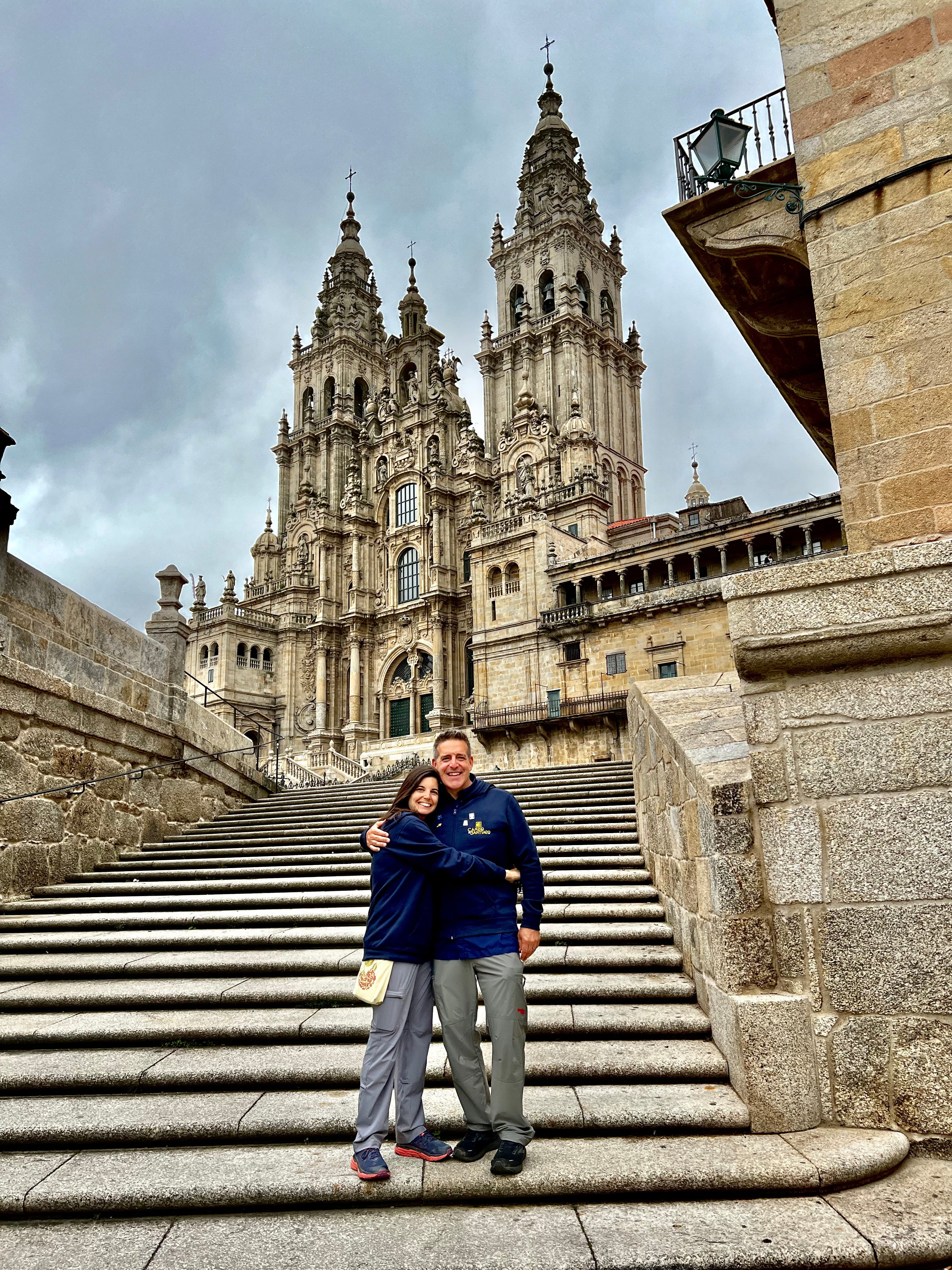
What do you/will you use to guide your journey along the Camino de Santiago?
🎥Camino Conversations: Join me for live interviews here on Substack!
What a wonderful conversation I had last week with Josh Woll of The Sober Creative! He calls sobriety “the pilgrimage inside,” and the parallels to the Camino are striking — the brave choice to begin something unknown, the humility to ask for help, the discipline of daily steps, the shedding of what no longer serves you, and the quiet transformation that happens along the way. Watch my interview with Josh here.
Coming up this week:
Wednesday, March 4, 11am ET — Walking the Camino in Comfort with Kacey Ratterree. The Camino will challenge you — physically, emotionally, spiritually. Kacey has learned to say yes to that during her multiple walks on Camino de Santiago routes… and also yes to a few well-chosen comforts. She’ll tell us what they are and how she plans for them.
Listen to previous episodes of Camino Conversations on Spotify or watch them here.
Want to be a guest on Camino Conversations? Email me at Rebecca@TheCaminoCalls.com or leave a comment below.
🥾Ready to start planning your Camino?
Rebecca Weston
Camino Planning & Preparation Guide (for People 45+)
Rebecca@TheCaminoCalls.com
Your Camino adventure should feel exciting, not stressful — here are some ways I can help you get ready:
Watch Camino Conversations for practical tips and advice from my guests who have done the Camino (or more than one!).
🗓️ Camino Planning Session (60 min): Get answers to your top questions and a notes doc created during our call.
📞 Full Camino Experience: 6 coaching calls with detailed notes to plan your trip with confidence and ease.
🥾 Walk With Rebecca: 7-day hybrid Camino walks — 3 days guided, 4 days independent, private rooms, preparation classes, and optional check-ins. Click here to be the first to be notified about my next trip.Rebecca Weston is an American who walked her first Camino in 2012.
About me: I’ve walked more than a dozen Caminos since my first in 2012. I’ve spent many days volunteering along the trail, and if I’m not walking one now, I’m planning the next—and would love nothing more than to help you plan yours, too. Originally from the US, my husband and I live in a town of 6500 people on the Camino del Norte.