

A few years ago, I thought I’d found it: the best method for language learning.
But then I heard it explained that no matter how badly you want to learn a language, if you can’t find content that keeps you interested and motivated, it won’t work.
This explains why I only listened to the first 30 lessons on Pimsleur. Why I only got through Chapter 5 on Spanish with Paul. And why, when I finally found Dreaming Spanish, I ramped up to watching 2 hours per day of Spanish content and loved it.
Forget the 2 hours per day for a second—I don’t want that to intimidate anyone. I was doing that because I was living in Spain and wanted to learn the language ASAP.
The important part here is that I was enjoying my 2 hours per day of Spanish. I’d finally found something that worked for me and kept me motivated.
Dreaming Spanish is a website for adult language learners. It’s based on the philosophy of “comprehensible input” — that you can learn a language by listening to content that you 1) are interested in and 2) you understand.
Understanding
For those of you saying, “But how can I understand a video in Spanish if I’ve never studied it?” they have the answer: you watch the super beginner and beginner level videos where they supplement their speaking with images. The goal is that you understand the topic in general (not every word) thanks to the combination of listening and seeing the drawings and images on the screen.
Interesting
Before I found Dreaming Spanish, I’d been told to watch Peppa Pig cartoons in Spanish. I suffered through quite a few episodes of the high-pitched voice of the piglets before giving up. If their voices were less annoying, I still couldn’t have continued as the story lines were for kids—and, as such, uninteresting to me.
This is where Dreaming Spanish hooked me. Their content is made for adult learners. I could watch videos about one person’s travels in Thailand, another’s life in Granada. I watched videos about the history of Spain. I watched people playing games in Spanish. I loved seeing tours of their homes and apartments in various Spain locales, and eventually in other Spanish-speaking countries around the world. And guess what? Much of the time, I forgot I was watching in Spanish. (Which is good as you’re not supposed to concentrate on that.)
More pluses
The biggest reason “compressible input” attracted me was because we were instructed not to try to understand every word, not to take notes. Just listen actively. (i.e. focusing only on the content — not doing anything else at the same time.)
Eventually, as their site predicted, I got to the point where I could understand other Spanish You Tube teachers (Español con Juan and was a favorite). Then, I advanced to being able to understand YouTube content made by and for native speakers. I followed Planeta Juan (a Columbian YouTuber) to Cuba and Syria; I followed Alex Tienda to North Korea (I was, at the time, super interested in places most Americans would never think/dare/dream to visit).
What About You?
As I said at the start, I kept up with my Spanish language-learning journey thanks to finding a site with interesting content that eventually gave me the skills to listen to ever-more-interesting content. (Just yesterday, I spent 45 minutes watching 2025 Nobel Peace Prize winner Maria Corina Muchado answering questions from reporters around the Spanish-speaking world.)
But maybe you’re more of a traditionalist. I remember a retired Ob/Gyn doctor who had just moved to Spain who explained to me that to become a doctor he had to be really good at learning from textbooks—that was the studying method he knew, the method that had worked in the past, so that was his plan for Spanish.
I remember watching numerous videos from thirty-something year old men who learned English thanks to video games. When they were younger, if they wanted to learn to improve, they had to be able to watch YouTube videos about the games—which were mostly in English back then. If they wanted to engage with players around the world, the common language was English. These were men who said they hated languages in school. But learning English to get better or engage further with something that interested them? That was a different story.
How did they learn?
I’m very curious as to how people learn other languages. I used to ask as part of my own research—did they have some method or course or tool that might help me? But then I read that the reason many people don’t learn another language is because they never actually stick with any one method. They jump from one to another.
At the time, I thought that meant the answer is sticking to one thing—even if you don’t enjoy it. Now, I realize the answer is finding the way in which you enjoy learning—and stick to that.
Speaking of things you enjoy, if you’re enjoying my writing, please hit the heart button to like this post and/or leave a comment. It helps a lot!
With love,
Rebecca
P.S. #1: For those of you that noticed I never once mentioned going to a Spanish language school, here’s why.
P.S. #2: Do I think you absolutely need to learn Spanish before going to Spain and walking the Camino de Santiago? No. But it will definitely enrich your experience. If you want to learn specifically what you’ll need for the Camino, check out Maria Seco.
P.S. #3: This was the third part of my 3-part series on language learning. Click here for Part 1 and here for Part 2.
How did you/are you learning Spanish? What has worked for you? What hasn’t? Do you use any of the resources I mentioned? Have any of your own to recommend?
🎥Join me for live interviews here on Substack!
Sure, I can tell you all about how to train for, plan, and walk the Camino de Santiago. But what’s better than me? Conversations with others (45+) who have done it!
Wednesday, December 17, 11-11:45 ET: Kathie Carnahan is one of the four wonderful women who joined me on my first Camino Walk with Rebecca in October. Join us to hear about her experiences on the Camino Inglés and get inspired by her journey from dreaming it to doing it!
Can’t wait? Watch my past interviews here.
Have your own questions for my guests? Join us live or leave a comment here and I’ll be sure to ask!
🥾Ready to start planning your Camino?
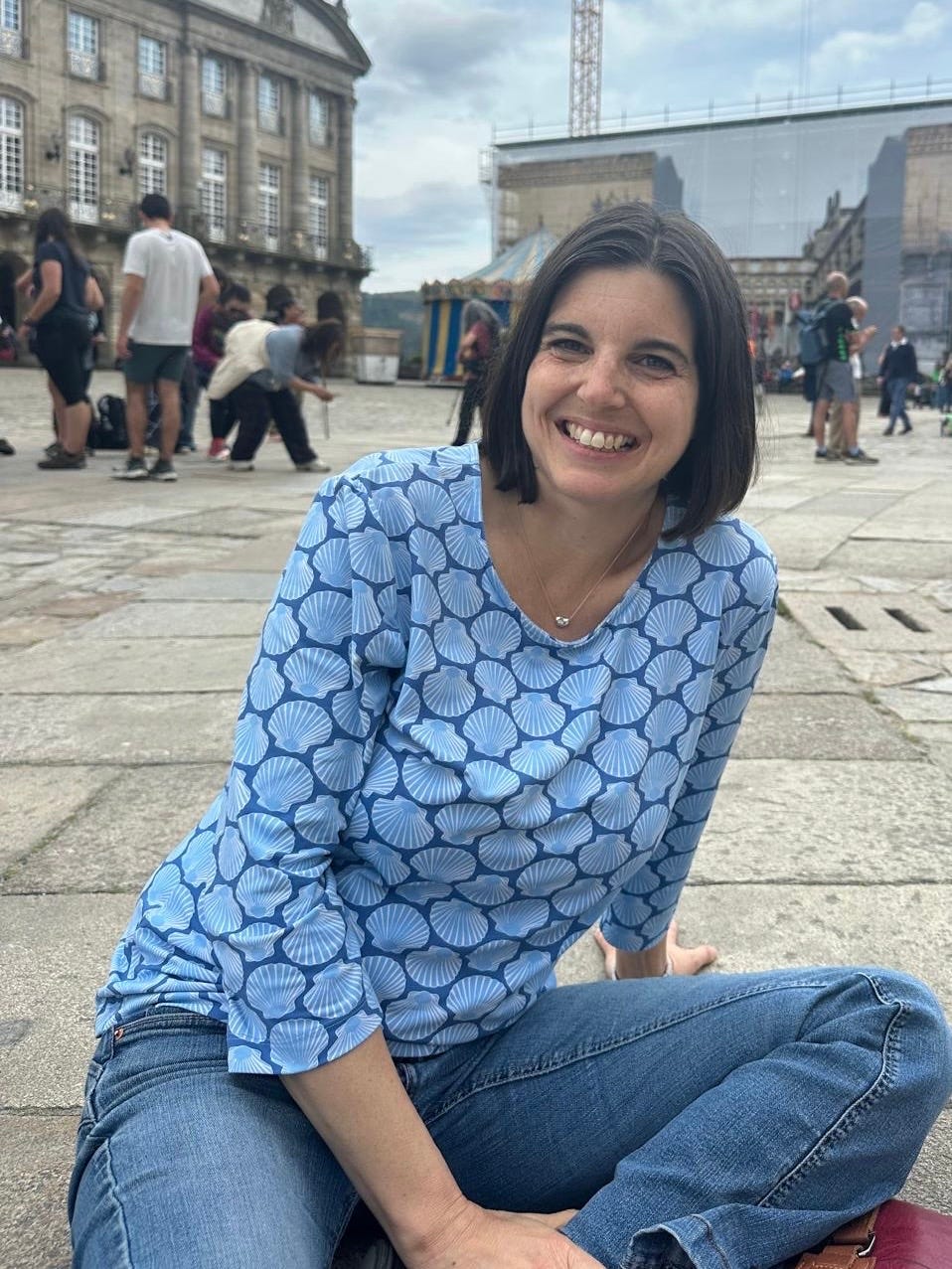
Rebecca Weston
Camino Planning & Preparation Guide (for People 45+)
Rebecca@TheCaminoCalls.com
Your Camino adventure should feel exciting, not stressful — here are some ways I can help you get ready:
Watch Camino Conversations for practical tips and advice from my guests who have done the Camino (or more than one!).
🗓️ Camino Planning Session (60 min): Get answers to your top questions and a notes doc created during our call.
📞 Full Camino Experience: 6 coaching calls with detailed notes to plan your trip with confidence and ease.
🥾 Walk With Rebecca: 7-day hybrid Camino walks — 3 days guided, 4 days independent, private rooms, preparation classes, and optional check-ins. Click here to be the first to be notified about my next trip.Rebecca Weston is an American who walked her first Camino in 2012.
About me: I’ve walked more than a dozen Caminos since my first in 2012. I’ve spent many days volunteering along the trail, and if I’m not walking one now, I’m planning the next—and would love nothing more than to help you plan yours, too. Originally from the US, my husband and I live in a town of 6500 people on the Camino del Norte.
Is there a similar one for French?
When I was planning my first **Spanish** Camino, I did the "academic" thing. I took a course at the local community college. I hated it. The teacher was wonderful but somehow I realized that I was not spending enough time outside of class doing the homework and the many extra stuff she suggested.
When I finally went on the Camino Frances, my third Camino, I went with English, courtesy words, important, survival words like "water", and lots of smiles and pointing.
I learned that it is helpful to use Latinized words even the conversation sounds stilted to you:
Reservation instead of "booking"
ordinary instead of plain, extra ordinary
nature instead of "outdoors"
nourishment instead of "food"
You get the idea.
I also had a small notebook and pen in my pocket. I could write down a word I mispronounced and so could they. A notebook, not a phone. A phone may be intimidating.
These techniques worked when I tried to talk to locals in villages, not so much with other pilgrims who are walking fast.
Enjoy!!