
Hello Camino friends! Here’s what’s in this issue:
📆 “Small Winter Habits, Big Camino Moments”
📸Scenes from the Camino
🎥I’m going live on Substack with Joe Jacquinet and Kathie Carnahan!
🥾How to get help planning your Camino.
Are you getting my posts directly to your email or Substack feed? If not, click here to join us.
“What’s the Camino?”
❓Not even sure what the Camino de Santiago is? Start here.
🤔Heard of the Camino but not sure if it’s for you? Read this.
Let’s get started!
Small Winter Habits, Big Camino Moments
Today kicks off a multi-part series on things you can do over the winter to prepare for your Camino in 2026.
—
When I was 16, I was lucky enough to spend 6 weeks living with a French-speaking family in Switzerland. It was there that I first heard this joke:
Q: What do you call someone who speaks three languages?
A: Tri-lingual.
Q: What do you call someone who speak two languages?
A: Bi-lingual.
Q: What do you call someone who speaks one language?
A: American
Harsh? Maybe. But it stayed with me.
One European tried to comfort me by explaining, “If you drive for five hours in the US, you’re still surrounded by people speaking the same language. But if you drive five hours from many places in Europe? You are often in a different country that speaks a different language.” In other words, Europeans are more exposed to foreign languages. Though, by this argument, only if they travel.
I’m not here to debate the reasons behind Americans’ lack of multilingualism. Hopefully the U.S. government can figure that out—a 2020 Council on Foreign Relations report noted that in the US State Department, “language-designated positions overseas are 15 percent vacant, and 24 percent of those staffed are filled by officers who do not meet the minimum language requirement.”
What I can say is this: In my travels, people are often surprised that I, as an American, can speak any language other than English. They’ll ask how I learned it and, as a result, I’ve had great discussions about foreign language acquisition in various countries.
In Spain, for example, all movies are dubbed. But in Finland? Only kids movies. Therefore, adults wanting to see the latest Hollywood blockbuster are hearing it in English and reading Finnish subtitles. Imagine growing up and hearing every movie you’ve ever watched in another language—you’d probably pick up a few things. . .
I could go on about this, but my point is: don’t be that person—the one who thinks that everyone else should know English and then be surprised to be in a situation (on the Camino or in other travels) where that’s definitely not the case.
If you’re planning a Camino in 2026, this winter might be a great time to learn some basic Spanish phrases. But better yet? Learn enough to have a conversation. Most of us Camino pilgrims who know a bit of another language can tell you stories of times it made a difference—big or small.
I’ll tell you one of mine next week. I’ll also share my advice for learning a language without grammar books, without memorizing verb conjugations, and—dare I say it—while actually having some fun!
With love,
Rebecca
P.S. A couple years ago, my primary care doctor told me, when she learned I was studying Spanish, “You’re doing one of the best things out there to prevent dementia.” Not a bad bonus.
One Way To Learn Spanish
One great way to learn Spanish specifically for the Camino is with Maria Seco. She and I had a great discussion about this topic and you may be surprised at her answer to “Should I learn Spanish before embarking on my Camino?”
📸Scenes from the Camino
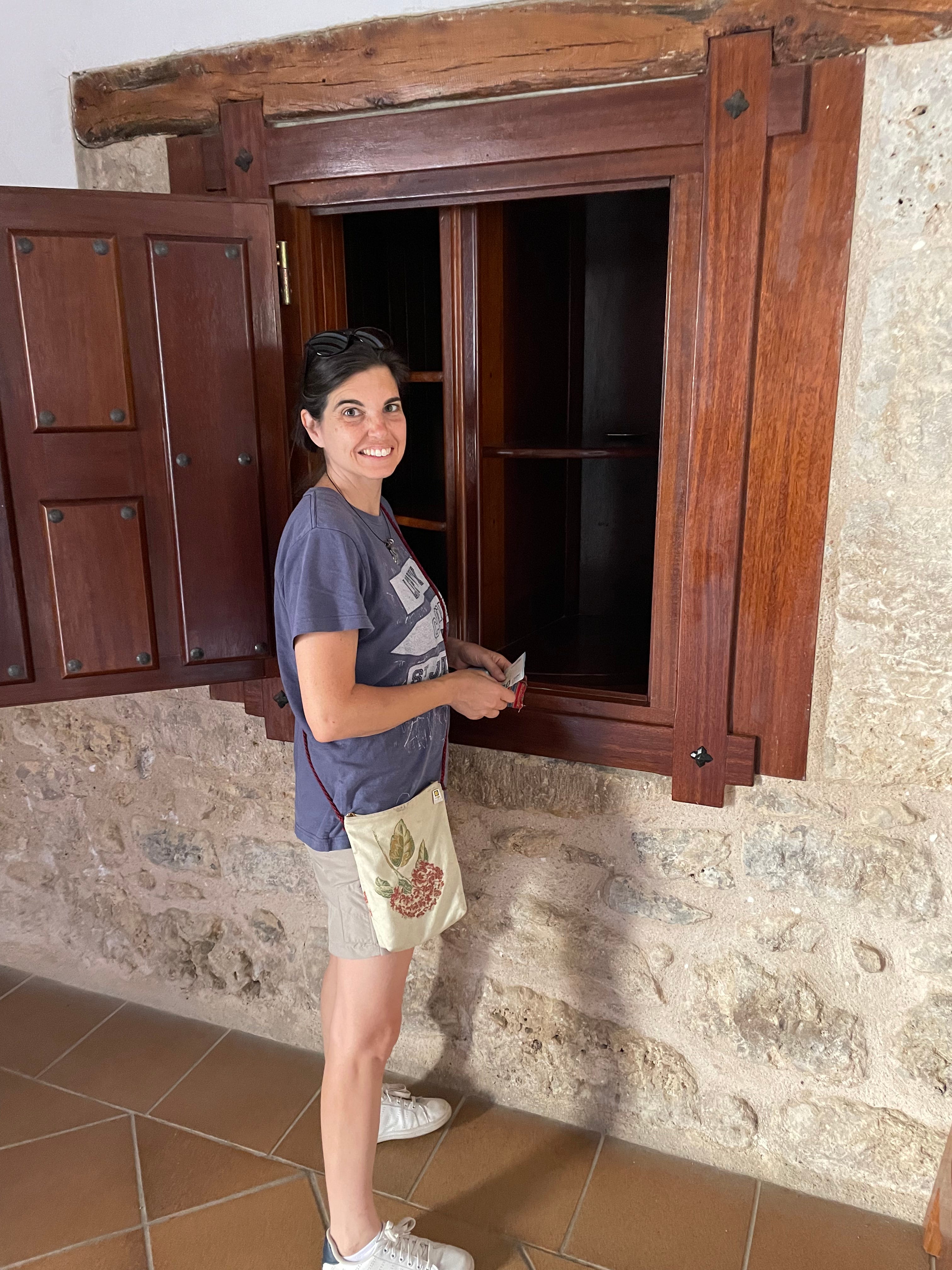

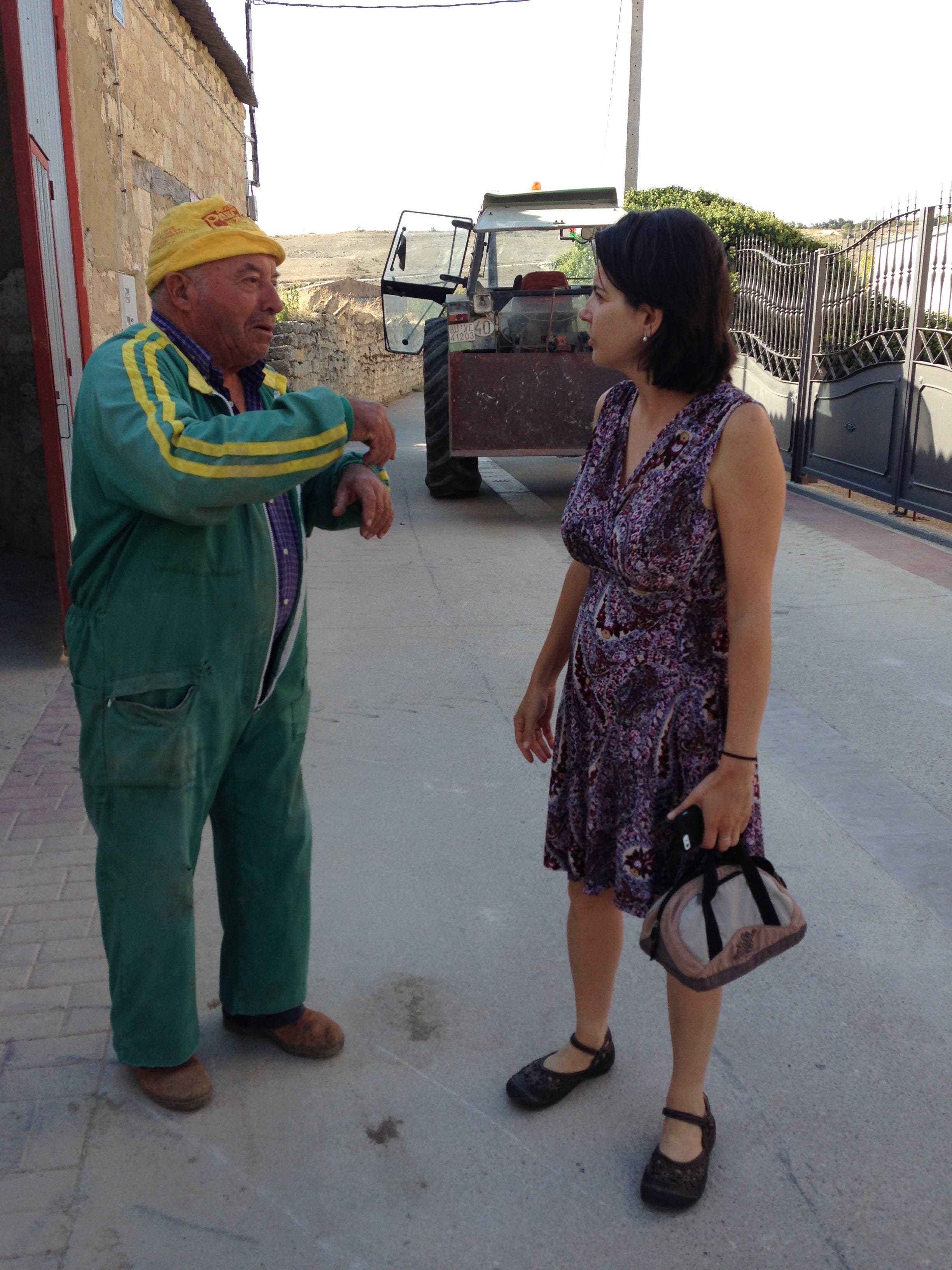
Do you have an experience where knowing just a few words of a foreign language made a difference? I’d love to hear it!
🎥Join me for live interviews with pilgrims who’ve walked one (or more!) Camino routes.
Wednesday, December 10, 11-11:45 ET: Joe Jacquinet. I met Joe last month on the Camino Inglés— a lesser-known Camino route that is just over 60 miles. I’m looking forward to learning how Joe came to choose this route and “comparing notes” with him about our respective journeys.
Wednesday, December 17, 11-11:45 ET: Kathie Carnahan is one of the four wonderful women who joined me on my first Camino Walk with Rebecca last month. Join us to hear about her experiences on the Camino Inglés and get inspired by her journey from dreaming it to doing it!
Have you walked the Camino de Santiago? Send me a message at Rebecca@TheCaminoCalls.com :)
Have your own questions for my guests? Join us live or leave a comment here and I’ll be sure to ask!
🥾Ready to start planning your Camino?
Rebecca Weston
Camino Planning & Preparation Guide (for People 45+)
Rebecca@TheCaminoCalls.com
Your Camino adventure should feel exciting, not stressful — here are some ways I can help you get ready:
Watch Camino Conversations for practical tips and advice from my guests who have done the Camino (or more than one!).
🗓️ Camino Planning Session (60 min): Get answers to your top questions and a notes doc created during our call.
📞 Full Camino Experience: 6 coaching calls with detailed notes to plan your trip with confidence and ease.
🥾 Walk With Rebecca: 7-day hybrid Camino walks — 3 days guided, 4 days independent, private rooms, preparation classes, and optional check-ins. Click here to be the first to be notified about my next trip.Rebecca Weston is an American who walked her first Camino in 2012.
About me: I’ve walked more than a dozen Caminos since my first in 2012. I’ve spent many days volunteering along the trail, and if I’m not walking one now, I’m planning the next—and would love nothing more than to help you plan yours, too. Originally from the US, my husband and I live in a town of 6500 people on the Camino del Norte.
Learning a language is an opportunity to grow your knowledge and also show respect for the people whose country you visit or live in. I’ve found people are appreciative when you attempt to speak even basic phrases. Thank you, please, good morning and always accompanied by a smile.